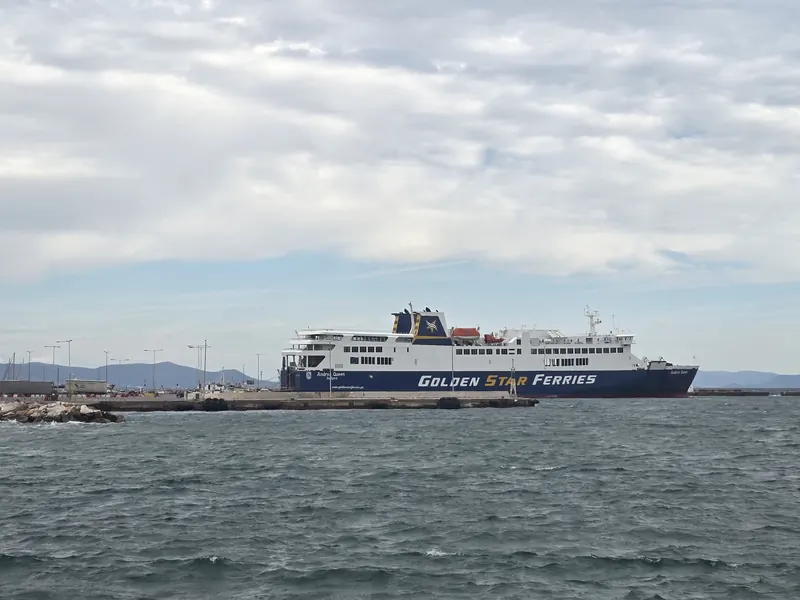
Extreme windy conditions can cause occasional and temporary sailing bans for ferries departing from Rafina port, but usually clear within the day.
Ferry Cancellations and Weather Delays at Rafina Port
Extreme winds can occasionally delay or even cause cancellations for ferries departing Rafina port. In summer, this is due to the weather phenomenon called the Meltemi, when on some days 100km sustained winds can occur. In the autumn or winter, stormy weather can also lead to sailing bans.
When ferries to or from Rafina are disrupted, it can throw travel plans into disarray. A best case scenario, is that a ferry is delayed by a few hours, but in the worst case, ferries may be cancelled for the rest of that day. Here's how it works, what you can do if it happens, and why building in buffer time to your travel schedule is so important.
Ferry Cancelled Right Now? Four Quick Steps
- Contact where you bought the ticket and ask for the next sailing or a refund. What happens to your ticket.
- Decide whether to go to the port or wait where you are. What to do next.
- If it looks like a night, book a room early. Stuck in Rafina.
- Phone numbers for the port authority and agents are on the Rafina port page.
Check sailings for your date
The Meltemi and Rafina Ferries
The Meltemi winds start from mid-June and last until early September, and August is typically the windiest month. In some ways they are a curse and a blessing. The blessing, is that when they blow reasonably mildly, it provides cooling relief to the sun-baked Cyclades islands.
The curse, is that on the extreme days, winds can blow in excess of 100km an hour. On these days, it might be too windy to sit on a sandy beach, and more importantly if you had travel plans, ferries could be cancelled.
A common observation, is that the winds are strongest around midday and in the afternoon, easing in the evening and overnight. If you have the option, choose a morning or evening ferry departure in order to miss the windiest part of the day.
Wind can come from any direction, so don't assume one port is shielded from it. Even so, Rafina is more likely than Piraeus to see its sailings stopped on a windy day.
In addition, it's not only whether or not it's windy in Rafina port, but whether it is at the destinations themselves. Three of the most common destinations to take a ferry to from Rafina are in addition known as the windiest islands in Greece: Andros, Tinos, and Mykonos.
How Often Are Ferries Really Cancelled?
Sailing bans in Greece due to bad weather happen perhaps a couple of days a year. Even then, the sailing ban might only be in place for a few hours. This means the odds are very much in your favor of never being affected at all by ferry cancellations. Still, it's something you should factor in to your travel plans just in case.
As an aside, ferries might be cancelled for a couple of other reasons. For example, don't plan to travel on ferry on May 1st which is known as a 'strike day'. Ferry unions might also call strikes (which is a stoppage of work), but this happens rarely in the June, July, August period when most people choose to travel. Finally, sometimes a ferry has a problem that throws the carefully arranged schedule out completely for a few days.
With all that said, I'd say that Greek ferry services from Rafina are still more reliable than an English train service!
How a Ferry Sailing Gets Cancelled
Let's look at it in a bit more detail so you know what to expect if you are the 0.0001% of ferry passengers affected by a cancelled greek ferry departure.
A sailing ban is an order from the port authority that keeps passenger ships and car ferries in port, rather than cancelling a single departure. It's issued when the forecast for any part of the route reaches force 9, or force 8 for smaller vessels, and it holds until conditions ease.
Short of a full ban, the captain and the local port authority decide whether an individual sailing goes, and sailings can be held back below ban level. High-speed ferries are the first to be delayed or cancelled, from around force 6 to 7, while the big conventional ferries generally keep going until conditions get worse. So on a blustery day, check whether you're booked on a high-speed or a conventional ferry before assuming you're stuck. The operators and ships page shows which is which.
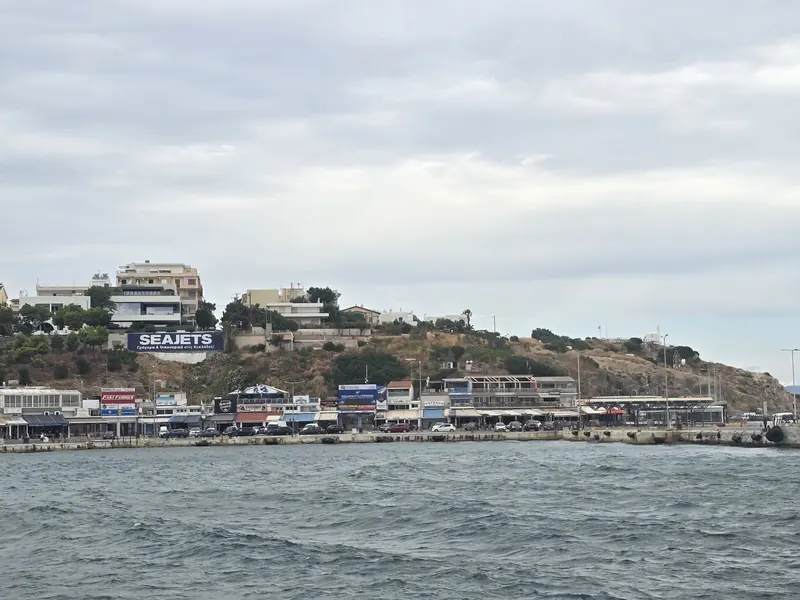
My ferry has been cancelled, what happens next?
A lot depends on where you are at the time, what sort of ban has been announced, and what the weather looks like. Our suggestion is to both contact where you got the ticket from, and to also make your way to the port. Importantly, exercise some patience. On the day, ask around. Your hotel owner, a taxi driver, anyone at the port and the café owner at the port will all have heard something.
No one is going to be able to give you a firm answer to 'when is this ferry going to sail', because the decision will either come down from the authorities based on the overall weather conditions, or be made at captain level depending on the circumstances.
The reason to make your way to the port, particularly if you are on one of the Greek islands, is that a weather delayed ferry might leave at very short notice, with a narrow boarding window. You don't want to have gone for a stroll to see the vessel you expected to take suddenly sailing away!
Your options about what to do overall will depend on your personal situation. If you have time, perhaps it's easier to stay where you are for a night and take a ferry the following morning. If the island has an airport, and you urgently need to get home, seeing if any seats are free might be an idea, assuming flights aren't cancelled as well. For other options, such as a sailing the next day, ask whoever you bought the ticket from.
It's also probably at this stage you will start digging around for travel insurance and reading the small print. Hopefully, you will have read this article before booking any ferry tickets rather than after and are adequately covered without worrying about it!
How Many Days to Leave Between a Ferry and a Flight Home
It's recommended to leave at least one clear day between your last ferry and your flight back home. Booking a ferry trip just a few hours before your international flight is risky. The extra day can either be spent in Rafina or Athens, and it's a lot less stressful!
What Happens to Your Ferry Ticket
If your sailing is cancelled, or delayed by more than an hour and a half, the choice is yours. You can rebook onto the next available sailing at no extra cost, or take a refund. You should be told about the cancellation or delay as soon as possible, and if the wait at the terminal runs past an hour and a half, you're entitled to snacks, meals or refreshments in proportion to the wait, where they're available.
In practice you are offered the next crossing with the same company, and a refund is also available. Tickets are not exchangeable between ferry companies, so if you discover that your operator isn't sailing but another is, you'll need to buy a new ticket.
What you're not owed in a weather cancellation is compensation for the delay itself, or free overnight accommodation. Neither applies when the weather makes it unsafe to sail. If you booked through an agency rather than the operator directly, go to them as well, since they hold your booking.
Read what your own policy says about weather before you count on it.
Check Before You Travel
If a windy day's coming, look at the forecast on meteo.gr or emy.gr, especially if you're on a high-speed ferry. Force 6 to 7 for the Cyclades is worth a second look, and force 8 or more can mean a ban. Your operator should get in touch if your sailing's off, so make sure your booking has a mobile number you'll have with you. To check a particular sailing, click through to your booking. There is no reliable way to check live status, which is one reason to be at the port at least half an hour before a departure. A local trick is to count the 'sheep' in the sea, the white tops of the waves. If there are not many, it's a calm day, and if there are a lot, it isn't.
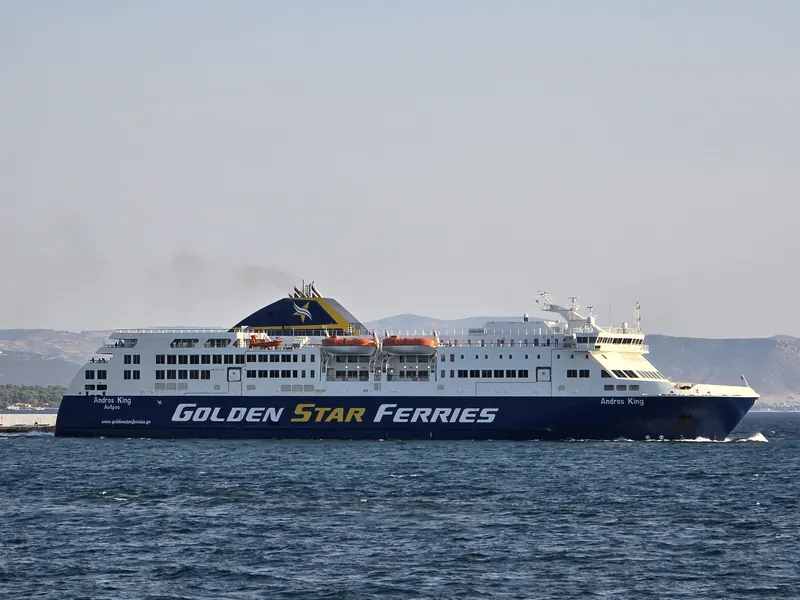
A Plan B for a Windy Crossing
Sort your back-up before you leave home, not at the port. Live sailing information is hard to find online, so don't count on getting it at the last minute.
- Go big and slow. When wind is in the forecast, one traveller's advice is to take one of the large conventional ferries.
- Carry your own luggage, and take motion sickness medication before you sail if you're prone to it.
- Don't head for the port at dawn without a confirmed departure.
- Don't write off the day. After a cancellation, a later boat may still run the same day.
Some people go further. One traveller held tickets on two different days as insurance against a cancellation.
Stuck in Rafina: What to Do
- Stay close to the port while there's a chance the ban lifts the same day. Check with your operator before wandering off.
- Decide early whether you want the next sailing or a refund, especially if you've got a flight to catch.
- Book a room as soon as it looks like an overnight, rather than waiting until evening. See where to stay.
- If the forecast is bad for days rather than hours, you might do better heading back into Athens, or looking at flights, than waiting it out. See Rafina to central Athens and Rafina to the airport.
- Fill the time. See where to eat and what to do while you wait.
- Keep receipts for anything you pay for, in case your operator or travel insurance covers it.
Strong winds in August don't mean cold weather, so if you are waiting in a taverna, pick one with shelter from the wind. In summer you don't need warm layers, only perhaps a light top over a T-shirt for the air-conditioning on the ferries.
For the usual pattern of sailings through the day and the season, see the ferry schedule.
Last checked: Fri 23 Oct 2026